

Ready to build better conversations?
Simple to set up. Easy to use. Powerful integrations.
Get startedReady to build better conversations?
Simple to set up. Easy to use. Powerful integrations.
Get startedThe 70-to-90 minutes of daily talk time that defines a productive recruiter's day isn’t a ceiling, it’s a target. And in most agencies, consultants are reaching it. The problem is that a significant portion of those minutes are going into calls that don't generate placements.
Status updates. Interview rescheduling. Start date confirmations. Availability checks. Salary band qualification. These aren’t placement conversations. They’re the calls that take up valuable space during the power hour, and crowd out the calls that should be in it. And in a business where every placed candidate is revenue, the difference between a consultant spending their talk time on placement conversations versus administrative ones is the difference between a strong quarter and a missed target.
The 35% problem
On any given day, 35% of outbound calls go unanswered. That figure isn’t a reflection of poor dialling technique or weak lists. It’s a structural reality of outbound recruitment, and it’s made worse by a problem most agencies deal with privately but rarely discuss publicly.
Outbound caller IDs get flagged as spam. Teams change their numbers daily or weekly just to maintain pick-up rates. The more calls a consultant makes, the faster their number is flagged, which forces more dials to compensate for falling connectivity, which accelerates the flagging cycle further. Some agencies are reporting that their numbers come up as spam at least once a week.
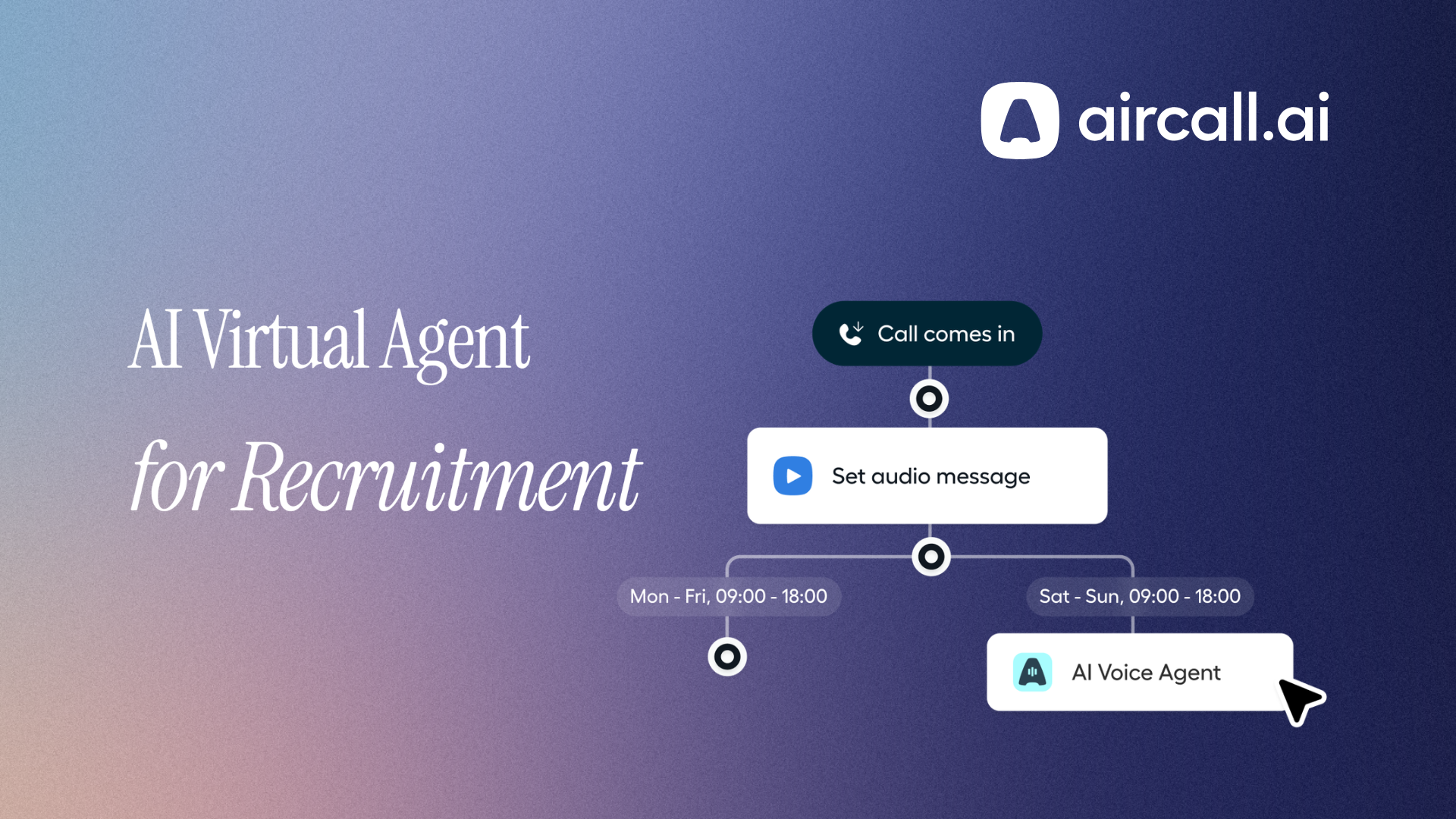
AI Virtual Agent handles the transactional outbound layer - pre-screening calls, availability checks, start date confirmations - independently of human recruiter numbers. Consultants preserve their own caller ID for the calls that matter: offer negotiations, client relationship conversations, and placements. Outbound volume increases. Recruiter reputation is protected.
The power hour works when the right calls are in it
The power hour model is effective when consultant time is concentrated on placement conversations. It breaks down when those conversations are diluted by high-volume, low-complexity calls that follow a predictable qualifying structure: availability, location, salary expectations, work authorisation, notice period.
These questions aren’t difficult, they’re consistent, and consistency is the condition under which AI Virtual Agents perform best. AI Virtual Agent conducts structured candidate pre-screening 24/7, capturing qualifying data in structured fields, logging it directly to HubSpot mid-call, and routing qualified candidates to the right desk - tech, commercial, or healthcare - based on what they say, not which IVR option they selected.
By the time a consultant's call connects with a candidate, the pre-screening is already done. The HubSpot record is already updated. The consultant knows whether this is a conversation worth having before it starts, and they spend their talk time accordingly.
Scaling setter teams is slow and expensive
The growth challenge that many agencies face is not a lack of demand, but the inability to scale the setter function quickly enough to meet it. One agency grew from four to eleven setters in a single week; a pace that hiring, onboarding, and ramp-up timelines can’t sustainably support.
AI Virtual Agent scales instantly. No hiring cycle. No onboarding. No ramp time. It handles parallel outbound calls and routes warm, qualified candidates to available consultants without requiring additional headcount. For agencies hitting seasonal peaks like the January-February primary hiring surge and the September-October secondary surge, that surge capacity is the difference between capturing the market window and losing it to agencies that can respond faster.
CRM completeness is a business asset, until it isn't
In most recruitment agencies, candidate data quality degrades in direct proportion to how busy the desk is. When consultants are running back-to-back calls during a power hour, call notes don't get written up. CRM records don't get updated. The context from a conversation that might determine whether a candidate is the right fit for a role six weeks later exists in someone's memory (or it doesn't).
When a consultant leaves, that context walks out with them. Pipeline visibility is poor. Managers can’t reliably verify talk time or call outcomes. The IP built through months of candidate development is effectively lost.
AI Virtual Agent auto-logs every interaction to HubSpot with a full transcript and AI-generated call summary. Every qualifying data point from every call, whether conducted by a virtual agent or a consultant, is captured in the right fields, on the right record, in real time. Managers have visibility. Candidates remain accessible regardless of which consultant originally developed the relationship. And the CRM reflects the pipeline as it actually is, not as it was last updated.
Assistants, not replacements
AI Virtual Agents in recruitment aren’t a replacement for the consultant relationship. The conversations that determine whether a placement lands - offer negotiations, objection handling, candidate advocacy, client relationship management - require experienced consultants, and they always will.
Only 30% of companies fill a role within 30 days. AI recruitment implementations have demonstrated revenue uplifts of 31%. The gap between those two benchmarks is where the operational argument for virtual agents lives; not in replacing the consultant, but in ensuring that the consultant's time goes toward the work that closes it.
Published on May 12, 2026.
